

Is Mazda a Reliable Car Brand?
Reliability is the question every serious car buyer asks eventually. Not “how does it drive on a test route,” but “what am I going to be dealing with at 80,000 miles?” For Mazda, the answer from independent data sources is consistently positive — and for the core models in the lineup, it’s been positive for over a decade. Here’s what the numbers actually show.
Is Mazda a Reliable Car Brand?
The short answer is backed by three independent data sources that use different methodologies and arrive at the same conclusion. J.D. Power surveys verified vehicle owners about problems in the first three years of ownership. RepairPal tracks actual repair costs and frequency across its network. Consumer Reports pulls data from 320,000 vehicles annually. When all three point the same direction, it’s not a coincidence.
What Do J.D. Power and Consumer Reports Say About Mazda Reliability?
J.D. Power 2025 Vehicle Dependability Study
Mazda jumped from 7th to 3rd overall in J.D. Power’s 2025 Vehicle Dependability Study, which measures problems reported by original owners of three-year-old vehicles. In the mass-market segment specifically, Mazda ranked 2nd — behind only a handful of luxury brands when comparing across the full study. This is a meaningful jump that reflects the maturation of the SKYACTIV platform across the full lineup.
Consumer Reports
Consumer Reports pulls reliability data from its annual survey of approximately 320,000 vehicles. For Mazda, the picture is strong for core models with one honest caveat. The CX-5 and Mazda3 consistently earn top marks and remain Consumer Reports recommended vehicles. The CX-30 and CX-50 also rate above average. However, the CX-90 and CX-70 — both on entirely new platforms with new powertrains — have shown below-average reliability scores, reflecting the growing pains common to first-year vehicles with new architectures. Mazda has been actively addressing these through software and hardware updates. If you’re buying a CX-90 or CX-70, checking the current model year’s updated reliability data before purchasing is worth the extra step.
RepairPal
According to RepairPal, the average annual repair cost for Mazda vehicles is $462, which falls below the industry average of $652. Only 10% of Mazda repairs are classified as severe, compared to a 12% industry average — meaning when something does go wrong, it tends to be a minor issue rather than a major one.
How Much Does a Mazda Cost to Own Long-Term?
Lower repair costs are the most direct financial benefit of reliability. The $190 annual gap between Mazda’s average repair cost and the industry average adds up meaningfully over time:
- Over 5 years: approximately $950 less in repair costs than the industry average
- Over 10 years: approximately $1,900 less — enough to cover several years of insurance or a significant portion of a first major service
- Severe repairs: only 10% of repairs vs. 12% industry average, meaning fewer unexpected large bills
Combined with Mazda’s competitive purchase prices, the long-term cost of ownership story is one of the brand’s most underappreciated advantages.
Which Mazda Models Are the Most Reliable?
| Model | Reliability Standing | Notable Data Point |
|---|---|---|
| Mazda CX-5 | ★ Excellent | Ranks 1st out of 26 midsize SUVs — RepairPal |
| Mazda3 Sedan/Hatchback | ★ Excellent | Consistently Consumer Reports recommended; 5-star NHTSA |
| Mazda CX-30 | ★ Excellent | Above-average reliability; best used years 2020, 2021, 2023 |
| Mazda CX-50 | ★ Strong | Solid across all model years; holds value well |
| Mazda MX-5 Miata | ★ Strong | Simple, proven drivetrain; low ownership costs |
| Mazda CX-90 / CX-70 | △ Monitor | New platform growing pains; Mazda actively updating; check current year ratings |
How Many Miles Does a Mazda Last?
The SKYACTIV era — which began in 2012 — marked a significant step forward in Mazda’s long-term durability. Pre-SKYACTIV models, particularly those using engines co-developed with Ford in the early 2000s, had documented issues with oil consumption and timing chain wear at higher mileage. The SKYACTIV-G engine addressed these problems at the design level: better combustion efficiency means less heat stress on components, and the engine’s mechanical simplicity (no turbo or hybrid components on the base 2.5L) reduces the number of systems that can require attention over time.
For Michigan drivers specifically, the SKYACTIV-Body’s high-tensile steel construction also holds up better against the salt and road conditions that accelerate corrosion on older vehicles.
Is Mazda More Reliable Than Toyota and Honda?
This is the comparison most buyers are actually making. Here’s how the three brands stack up on the metrics that matter:
| Brand | J.D. Power VDS 2025 Rank | RepairPal Score | Avg. Annual Repair Cost |
|---|---|---|---|
| Mazda 3rd Overall | 3rd overall / 2nd mass-market | 4.0 / 5.0 | $462 |
| Toyota | Top 10 | 4.0 / 5.0 | $441 |
| Honda | Top 10 | 4.0 / 5.0 | $428 |
| Industry Average | — | 3.0 / 5.0 | $652 |
The honest summary: Mazda, Toyota, and Honda are all strong reliability brands. Toyota and Honda have a slightly lower average annual repair cost, largely because their lineups include more mature platforms. Where Mazda differentiates is in the driving experience, safety awards, and interior quality it delivers alongside that reliability — making it the stronger overall value proposition for many buyers.
Shop Reliable Mazda Models at LaFontaine Mazda Kalamazoo
LaFontaine Mazda Kalamazoo carries the full 2026 Mazda lineup — including the CX-5 (ranked 1st in its segment for reliability by RepairPal), the Mazda3, CX-30, and CX-50. We also carry certified pre-owned Mazda models backed by the 7-year/100,000-mile powertrain warranty for buyers who want even more long-term confidence. We serve Southwest Michigan including Portage, Battle Creek, Grand Rapids, Holland, and Allegan.
Ready to drive a brand that backs its reliability with data?
View New Mazda Inventory Browse Certified Pre-Owned Schedule a Test DriveFrequently Asked Questions: Mazda Reliability
Is Mazda a reliable car brand?
Yes. Mazda ranks 3rd overall in J.D. Power’s 2025 Vehicle Dependability Study and 2nd among mass-market brands. RepairPal rates Mazda 4.0 out of 5.0 and 5th overall. The average annual repair cost for a Mazda is $462 — $190 less than the industry average of $652.
How many miles does a Mazda last?
A well-maintained Mazda typically lasts 150,000 to 200,000 miles. The SKYACTIV-G engine that powers most current models is built for durability with regular oil changes and routine service. Many owners report reaching 150,000 miles with no major unscheduled repairs.
Is Mazda more reliable than Toyota?
In J.D. Power’s 2025 Vehicle Dependability Study, Mazda ranked higher than Toyota overall. Both brands earn similar RepairPal reliability scores of 4.0 out of 5.0. Toyota has a slightly lower average annual repair cost ($441 vs. $462), but both brands are well above the industry average in long-term dependability.
Which Mazda model is the most reliable?
The Mazda CX-5 ranks 1st out of 26 midsize SUVs in RepairPal’s reliability rankings. The Mazda3 and CX-30 also consistently earn top marks from Consumer Reports and J.D. Power. The CX-90 and CX-70 have shown some first-year growing pains, so checking the latest model year data before purchasing those models is recommended.
How much does it cost to maintain a Mazda?
According to RepairPal, the average annual repair and maintenance cost for a Mazda is $462, compared to an industry average of $652. Only 10% of Mazda repairs are classified as severe versus a 12% industry average, meaning most issues that come up are minor.
Is a used Mazda a good buy for reliability?
Yes, particularly SKYACTIV-era models from 2013 onward. The CX-5, Mazda3, and CX-30 carry strong long-term reliability records and are consistently recommended by Consumer Reports in the used car market. A certified pre-owned Mazda adds a 7-year/100,000-mile powertrain warranty for additional peace of mind.
2026 Mazda CX-5 vs. Toyota RAV4
Two of the best-selling compact SUVs in America arrived fully redesigned for 2026 — making this the most interesting CX-5 vs. RAV4 matchup in years. The 2026 Mazda CX-5 enters its third generation with a new platform, a 12.9-inch touchscreen, and AWD standard on every trim, starting at $29,990. The 2026 Toyota RAV4 makes a bold move: it goes all-hybrid, ditching gas-only engines entirely for a 226–236 hp system that delivers approximately 43 MPG combined. Two strong redesigns, two very different philosophies. Here’s how they actually compare for drivers in Southwest Michigan.
Is the 2026 Mazda CX-5 Better Than the Toyota RAV4?
How Do the 2026 CX-5 and RAV4 Compare on Price?
The pricing gap is larger than it first appears — especially when you factor in AWD.
- 2026 Mazda CX-5: Starts at $29,990 — AWD included as standard
- 2026 Toyota RAV4: Starts at $31,900 — front-wheel drive standard, AWD costs $1,400 extra
For an apples-to-apples AWD comparison, the base CX-5 at $29,990 competes with a RAV4 at $33,300. That’s a $3,310 difference for equivalent drivetrain capability — meaningful for most buyers’ budgets. The CX-5 also tops out under $40,000; the RAV4 Limited reaches $43,300.
What’s Different About the Powertrains?
2026 Mazda CX-5
The CX-5 runs a proven 2.5L SKYACTIV-G four-cylinder producing 187 hp and 186 lb-ft of torque through a six-speed automatic. i-ACTIV AWD is standard across all trims. A turbocharged 2.5T option (256 hp, 320 lb-ft) is available on higher trims for buyers who want more performance. Fuel economy lands at approximately 24 city / 30 highway / 26 combined.
2026 Toyota RAV4
Toyota made a significant bet for 2026: the RAV4 goes all-hybrid, eliminating the gas-only engine entirely. The fifth-generation hybrid system pairs a 2.5L four-cylinder with electric motors for 226 hp (FWD) or 236 hp (AWD) and delivers approximately 43 MPG combined — a genuine advantage over the CX-5 on fuel economy. A plug-in hybrid version (RAV4 Prime) is also available with around 42 miles of all-electric range. The tradeoff: AWD costs extra, and some buyers won’t want a hybrid-only lineup.
Which Is Safer — the CX-5 or RAV4?
The 2026 Mazda CX-5 earns IIHS Top Safety Pick+ — the highest safety award available. Mazda as a brand earned more TSP+ awards than any other automaker in 2026 for the third consecutive year, and Consumer Reports named Mazda its first-ever Safest New-Car Brand. Every CX-5 comes with i-ACTIVSENSE safety standard across all trims, including Automatic Emergency Braking, Blind Spot Monitoring, and Rear Cross-Traffic Alert.
The RAV4 includes Toyota Safety Sense 3.0 as standard, which is also a strong suite. Both are safe vehicles. On independent safety rankings, Mazda currently holds the edge.
How Do the Interiors Compare?
Mazda CX-5
Interior quality is where the CX-5 consistently surprises buyers stepping in from competitors. The 2026 redesign brings a standard 12.9-inch touchscreen (15.6-inch on the top trim — the largest in the segment), a clean dashboard layout, and available premium materials that feel genuinely upscale. Wireless Apple CarPlay and Android Auto are standard. Available finishes include the new Terracotta interior option that gives the CX-5 a distinct, premium character. Cargo space is 33.7 cubic feet behind the second row.
Toyota RAV4
The RAV4 comes with a standard 10.5-inch infotainment screen (12.9-inch optional), wireless CarPlay and Android Auto standard, and a practical, durable interior built for everyday utility. Toyota added a built-in dashcam on the 2026 RAV4 — a nice feature. Cargo capacity is 37.8 cubic feet behind the second row, a meaningful edge for buyers who haul gear regularly.
Which Gets Better Fuel Economy?
The RAV4 wins this category, and it’s not close. The 2026 RAV4’s all-hybrid powertrain delivers approximately 43 MPG combined versus the CX-5’s 26 MPG combined. Over 15,000 miles per year at $3.50/gallon, that difference saves roughly $750 annually in fuel. Over five years, that’s approximately $3,750 — which partially closes the $3,310 AWD price gap between the two vehicles.
If fuel economy is your top priority, the RAV4 makes the stronger long-term financial argument. If AWD capability, safety ratings, and interior quality take priority, the CX-5 leads.
Full Specs: 2026 Mazda CX-5 vs. Toyota RAV4
| Category | 2026 Mazda CX-5 | 2026 Toyota RAV4 |
|---|---|---|
| Base MSRP | $29,990 | $31,900 |
| AWD | Standard — all trims | Optional (+$1,400) |
| Base Price w/ AWD | $29,990 | $33,300 |
| Powertrain | 2.5L gas, 187 hp | 2.5L hybrid, 226–236 hp |
| Fuel Economy (combined) | ~26 MPG | ~43 MPG |
| Infotainment Screen | 12.9-inch standard | 10.5-inch standard |
| Wireless CarPlay | Standard | Standard |
| Safety Suite | i-ACTIVSENSE — all trims | Toyota Safety Sense 3.0 |
| IIHS Top Safety Pick+ | ✓ Awarded | Check current ratings |
| Cargo Space (behind 2nd row) | 33.7 cu ft | 37.8 cu ft |
| Turbo Option | Yes — 256 hp available | No (PHEV available) |
| Top Trim Price | Under $40,000 | $43,300 |
CX-5 vs. RAV4: Who Wins Each Category?
2026 Mazda CX-5 Wins
- Starting price ($1,910 less)
- AWD standard — no upgrade fee
- IIHS safety awards
- Interior quality and refinement
- Larger standard touchscreen
- Turbo engine option (256 hp)
- Lower top-trim price
2026 Toyota RAV4 Wins
- Fuel economy (~43 MPG combined)
- Cargo space (37.8 vs. 33.7 cu ft)
- Higher base horsepower
- Plug-in hybrid (RAV4 Prime) option
- Built-in dashcam
- Long-term fuel savings
Which Is the Better Choice for Michigan Drivers?
Michigan winters make the AWD question particularly relevant. The CX-5’s standard i-ACTIV AWD is a genuine advantage here — you get real, torque-vectoring all-wheel drive without paying extra, on every trim level. To get AWD on the RAV4, you’re adding $1,400 to the purchase price.
For commuters in Kalamazoo, Portage, or Battle Creek covering mostly highway miles, the RAV4’s hybrid efficiency advantage (~$750/year in fuel savings) builds a real long-term case. For drivers who prioritize premium feel, driving engagement, safety ratings, and standard AWD at a lower entry price, the CX-5 consistently delivers more for the dollar.
The honest bottom line: the CX-5 wins on value, safety, and driving experience. The RAV4 wins on fuel economy and cargo. Know which matters more to you, and the decision gets straightforward.
Test Drive the 2026 Mazda CX-5 Near Kalamazoo, MI
LaFontaine Mazda Kalamazoo carries the full 2026 CX-5 lineup, from the value-oriented base trim to the turbocharged upper models. We serve drivers from across Southwest Michigan — including Portage, Battle Creek, Grand Rapids, Holland, and Allegan — and our team can walk you through a direct comparison with any vehicle on your list.
Ready to see the 2026 Mazda CX-5 in person?
View CX-5 Inventory Schedule a Test Drive Get Pre-ApprovedFrequently Asked Questions: 2026 Mazda CX-5 vs. Toyota RAV4
Is the 2026 Mazda CX-5 better than the Toyota RAV4?
It depends on priorities. The CX-5 starts $1,910 less, includes AWD standard, leads in safety awards, and delivers a more premium interior. The RAV4 wins on fuel economy (~43 MPG combined vs. ~26 MPG) and cargo space. For Michigan drivers who prioritize value, AWD, and safety, the CX-5 is the stronger choice.
How much does the 2026 Mazda CX-5 cost compared to the RAV4?
The 2026 Mazda CX-5 starts at $29,990 with AWD standard. The 2026 Toyota RAV4 starts at $31,900 with front-wheel drive; AWD costs an additional $1,400, bringing an AWD RAV4 to $33,300. For an equivalent AWD comparison, the CX-5 is $3,310 less expensive.
Does the 2026 Toyota RAV4 come with AWD standard?
No. The 2026 RAV4 comes with front-wheel drive standard. AWD costs an additional $1,400. The 2026 Mazda CX-5 includes i-ACTIV AWD as standard on all trims at no extra charge.
Which gets better gas mileage — the CX-5 or RAV4?
The 2026 Toyota RAV4 gets significantly better fuel economy. The RAV4 is now hybrid-only, delivering approximately 43 MPG combined. The 2026 Mazda CX-5 runs on a gas engine rated at approximately 26 MPG combined. For buyers prioritizing fuel efficiency, the RAV4 is the clear winner.
Is the Mazda CX-5 or Toyota RAV4 safer?
The 2026 Mazda CX-5 earns IIHS Top Safety Pick+ and comes from the brand that earned more TSP+ awards than any other automaker in 2026. Consumer Reports named Mazda the first-ever Safest New-Car Brand. All Mazda models include i-ACTIVSENSE safety standard across all trims. Both vehicles are safe choices, but Mazda holds the edge on independent safety rankings.
Which compact SUV is better for Michigan winters — CX-5 or RAV4?
The 2026 Mazda CX-5 is the stronger choice for Michigan winters because i-ACTIV AWD is included as standard at no extra cost. Adding AWD to the 2026 RAV4 costs an additional $1,400. Both AWD systems perform well in snow and ice, but the CX-5 delivers it as the default, not an upgrade.
Is Mazda the Safest Car Brand?
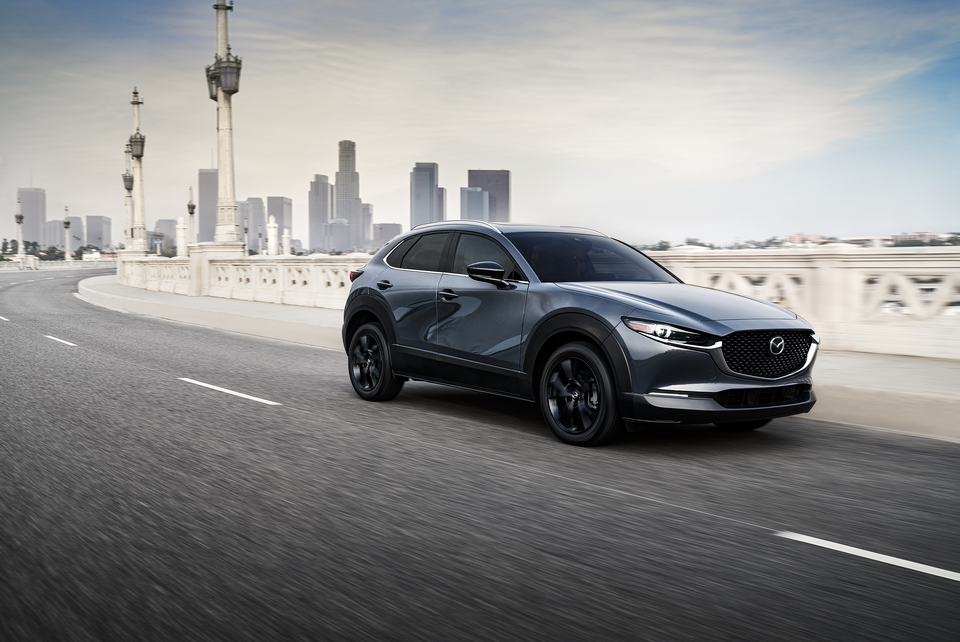
For the third consecutive year, Mazda has earned more IIHS Top Safety Pick+ awards than any other brand in America. And in early 2026, Consumer Reports made it official — naming Mazda its first-ever Safest New-Car Brand, a designation the publication had never given any automaker before. If you’ve wondered whether Mazda’s safety reputation is marketing or data, this is the data. Here’s exactly what the numbers show — and why it matters when you’re shopping for a new vehicle near Kalamazoo.
Is Mazda Actually the Safest Car Brand?
The short version: this isn’t opinion or brand positioning. Two of the most respected independent safety organizations in the United States — the Insurance Institute for Highway Safety (IIHS) and Consumer Reports — both arrived at the same conclusion independently. When a brand leads both, the data is hard to argue with.
What Did Consumer Reports Name Mazda in 2026?
Consumer Reports named Mazda its first-ever Safest New-Car Brand for 2026 — a distinction the publication had never awarded in its history. Consumer Reports evaluates safety across four dimensions: crash test results, crash avoidance technology, braking performance, and the usability of safety controls. The last category — usability — is where many manufacturers stumble, as poorly designed touchscreens and complex menus distract drivers and increase accident risk.
Mazda earned top marks across all four categories, with i-ACTIVSENSE safety tech standard at every trim level and a redesigned interface built to minimize driver distraction.
How Many IIHS Top Safety Pick+ Awards Does Mazda Have in 2026?
Mazda earned eight IIHS Top Safety Pick+ awards for the 2026 model year — more than any other automaker, under the strictest criteria the IIHS has ever applied. The criteria were tightened for 2026 to include a new vehicle-to-vehicle front crash prevention test evaluated at 31, 37, and 43 mph against cars, motorcycles, and semi-trailers. Mazda passed under those stricter standards while many competitors did not.
“Mazda continues to excel in safety with eight IIHS TOP SAFETY PICK+ models this year. They are providing consumers with the best in safety features at a range of prices.” — David Harkey, President, Insurance Institute for Highway Safety
Here are all nine 2026 Mazda models earning the top IIHS award, and what four of them start at:
| Model | IIHS TSP+ 2026 | Starting MSRP |
|---|---|---|
| Mazda3 Sedan | ✓ Top Safety Pick+ | From $24,550 |
| Mazda3 Hatchback | ✓ Top Safety Pick+ | From $25,550 |
| Mazda CX-30 | ✓ Top Safety Pick+ | From $25,975 |
| Mazda CX-50 | ✓ Top Safety Pick+ | From $29,900 |
| Mazda CX-50 Hybrid | ✓ Top Safety Pick+ | See dealer |
| Mazda CX-70 | ✓ Top Safety Pick+ | See dealer |
| Mazda CX-70 PHEV | ✓ Top Safety Pick+ | See dealer |
| Mazda CX-90 | ✓ Top Safety Pick+ | See dealer |
| Mazda CX-90 PHEV | ✓ Top Safety Pick+ | See dealer |
Four of those nine award-winning models start under $30,000 — more affordable TSP+ winners than any other brand offers.
What Does IIHS Top Safety Pick+ Actually Mean?
The IIHS (Insurance Institute for Highway Safety) is an independent research organization funded by insurance companies — which have a direct financial interest in making crashes rare. To earn Top Safety Pick+, a vehicle must score “Good” in every major crash test category, including:
- Small overlap front crash test
- Moderate overlap front crash test
- Side impact test
- Pedestrian front crash prevention
- Vehicle-to-vehicle front crash prevention (new, stricter version for 2026)
- Acceptable or Good headlight ratings
Top Safety Pick+ is the highest award the IIHS gives. Only 45 vehicles earned it across all brands in 2026. Mazda placed nine of them.
What Safety Features Come Standard on Every Mazda?
A key reason Mazda leads safety rankings is that i-ACTIVSENSE — Mazda’s full driver-assistance suite — comes standard on every Mazda at every trim level. Most brands charge extra for these features or limit them to higher trims. Mazda includes them all at the base price.
i-ACTIVSENSE standard features include:
- Automatic Emergency Braking with Pedestrian and Cyclist Detection
- Blind Spot Monitoring
- Rear Cross-Traffic Alert
- Lane Keep Assist
- Driver Attention Alert
- High Beam Control
This is exactly what IIHS President David Harkey called out specifically — providing the best safety features “at a range of prices.”
How Does Mazda Safety Compare to Toyota, Honda, and Subaru?
Subaru has built a strong safety reputation — and rightly so. Toyota and Honda are among the most trusted brands in America. Here’s how the 2026 IIHS award count actually compares:
| Brand | IIHS TSP+ Awards (2026) | Consumer Reports Safety | Safety Standard on All Trims? |
|---|---|---|---|
| Mazda | 8 — most of any brand | First-ever Safest New-Car Brand | Yes — all trims |
| Hyundai | 6 | Strong | Select trims |
| Audi | 6 | Strong | Select trims |
| Genesis | 5 | Strong | Select trims |
| Kia | 4 | Strong | Select trims |
| Subaru | 3 | Strong | Select trims |
| Toyota | 2 | Strong | Select trims |
| Honda | 2 | Strong | Select trims |
Subaru is often positioned as the safety leader in the SUV market — but Mazda earned nearly three times as many top-tier IIHS awards in 2026. The data gap is larger than most buyers realize going into their search.
Is Mazda a Safe Choice for Teen Drivers?
This is one of the most common questions parents ask when shopping for a first vehicle. In 2026, IIHS and Consumer Reports released their annual recommended vehicles for teen drivers. Mazda tied for the most models on the list with six recommendations — more than Toyota and Honda combined. Every recommended model comes with standard blind spot monitoring, automatic emergency braking, and driver attention alert — features that are particularly valuable for new drivers.
Does Mazda’s Safety Record Affect Insurance Costs?
It can. The IIHS is funded by insurance companies, and Top Safety Pick+ ratings are directly tied to insurance risk models. Vehicles that earn TSP+ often qualify for lower premiums with participating insurers. Combined with Mazda’s competitive starting prices — four TSP+ award winners starting under $30,000 — the safety advantage also becomes a long-term cost-of-ownership advantage.
Shop the Safest Models at LaFontaine Mazda Kalamazoo
LaFontaine Mazda Kalamazoo carries the full 2026 Mazda lineup, including all nine IIHS Top Safety Pick+ award-winning models. Every vehicle on our lot comes with i-ACTIVSENSE safety standard — no package upgrade, no extra cost. We serve buyers from across Southwest Michigan including Portage, Battle Creek, Grand Rapids, Holland, and Allegan.
Ready to drive the safest brand in America?
View New Mazda Inventory Schedule a Test Drive Get Pre-ApprovedFrequently Asked Questions: Mazda Safety
Is Mazda the safest car brand in 2026?
Yes. Mazda earned eight IIHS Top Safety Pick+ awards for 2026 — more than any other brand, for the third consecutive year. Consumer Reports also named Mazda its first-ever Safest New-Car Brand, a designation no automaker had previously received.
How many IIHS Top Safety Pick+ awards did Mazda earn for 2026?
Mazda earned eight IIHS Top Safety Pick+ awards for 2026, the most of any brand. The award-winning models are the Mazda3 Sedan, Mazda3 Hatchback, CX-30, CX-50, CX-50 Hybrid, CX-70, CX-70 PHEV, CX-90, and CX-90 PHEV. Four of those models start under $30,000.
Is Mazda safer than Toyota?
By IIHS Top Safety Pick+ count, yes. Mazda earned eight TSP+ awards for 2026; Toyota earned two. Mazda was also named Consumer Reports’ first-ever Safest New-Car Brand. Toyota is a highly reliable brand, but Mazda leads on crash test performance and standard safety technology.
What safety features come standard on every Mazda?
Every 2026 Mazda includes i-ACTIVSENSE as standard equipment across all trim levels. This suite includes Automatic Emergency Braking with Pedestrian Detection, Blind Spot Monitoring, Rear Cross-Traffic Alert, Lane Keep Assist, Driver Attention Alert, and High Beam Control — at no additional cost.
Which Mazda model is the safest?
All nine Mazda models that earned IIHS Top Safety Pick+ for 2026 carry the same top-tier award: Mazda3 Sedan, Mazda3 Hatchback, CX-30, CX-50, CX-50 Hybrid, CX-70, CX-70 PHEV, CX-90, and CX-90 PHEV. Every model also earned a 5-star NHTSA overall safety rating.
Does Mazda’s safety rating affect insurance costs?
It can. IIHS Top Safety Pick+ ratings are tied to insurance risk models, and vehicles with this award often qualify for lower premiums with participating insurers. Combined with Mazda’s competitive starting prices, the safety advantage also contributes to lower long-term ownership costs.
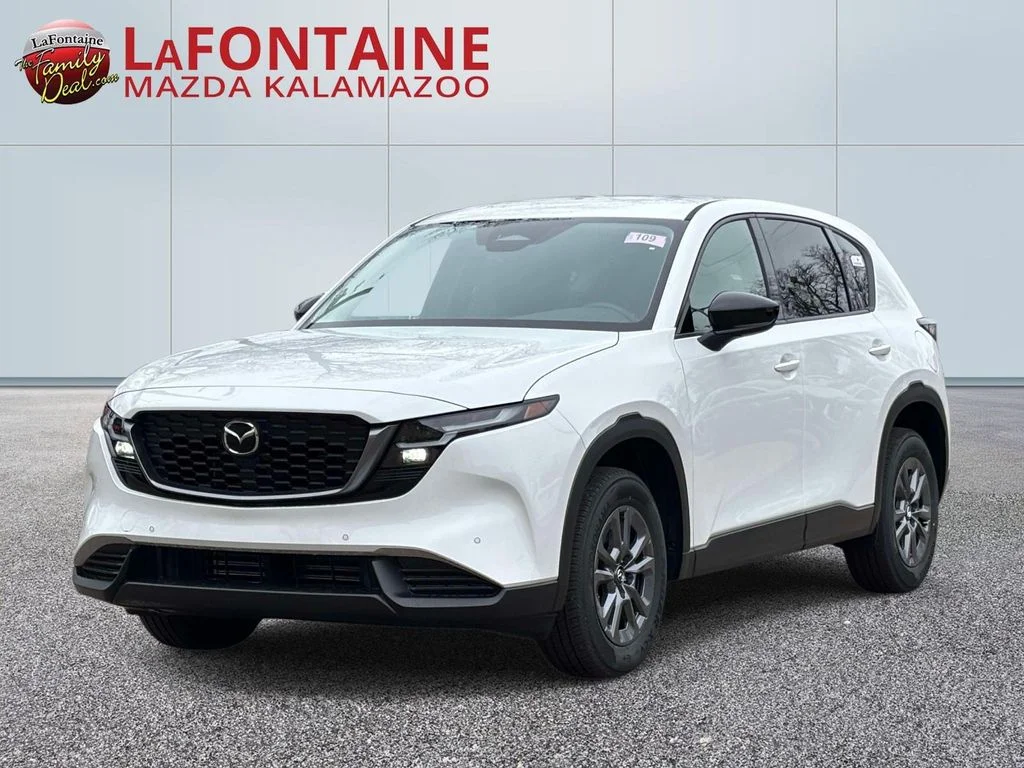
Is a Used Mazda CX-5 a Good Buy? Your Complete Guide
If you’ve been shopping for a dependable, driver-focused compact SUV, the Mazda CX-5 keeps coming up — and for good reason. The CX-5 has consistently earned top safety ratings, strong reliability scores, and the kind of interior quality that usually costs significantly more. With the newly redesigned 2026 model now on lots, pre-owned and certified CX-5s are showing up at strong values. This guide walks you through what to look for, which model years deliver the most, and how to choose between certified pre-owned and standard used.
What Makes the Mazda CX-5 a Strong Used Car?
The Mazda CX-5 holds its value well because it was built to last. It’s one of the few compact SUVs in its class that doesn’t feel like an afterthought inside — the materials, the driving experience, and the standard safety tech all reflect a brand that takes the driver seriously.
Here’s why the CX-5 stands out in the used market:
- SKYACTIV engines are known for longevity with regular maintenance
- i-ACTIV AWD handles Michigan winters reliably and is available on most trims
- Consistent IIHS Top Safety Pick ratings across model years
- Interior quality that holds up — no cheap materials degrading at 60,000 miles
- Strong resale value means previous owners typically took good care of them
Which Model Year of the Mazda CX-5 Is the Best to Buy Used?
The CX-5 entered its second generation in 2017, which is the starting point for the modern version most buyers are shopping. Here are the strongest used options by year range:
2019–2020 — Reliable Value
The second generation hit its stride here. Updated infotainment, refined suspension, and a cleaner interior. These are priced to move now that newer models are available — a strong buy for budget-conscious shoppers.
2021–2022 — Added Power & Tech
Mazda added a turbocharged 2.5T engine option and made Apple CarPlay and Android Auto standard on all trims. If performance matters, a used Turbo trim at this age is a compelling find.
2023–2024 — Most Feature-Rich Pre-2026
The newest models before the 2026 redesign. Wireless CarPlay became available, and these are now entering the certified pre-owned pipeline. Expect higher pricing but lower mileage and the latest features.
What’s the Difference Between Certified Pre-Owned (CPO) and Used?
A certified pre-owned Mazda CX-5 has passed a comprehensive inspection and comes backed by Mazda’s warranty program. A standard pre-owned CX-5 offers a lower upfront price without that coverage. Here’s how they compare side by side:
| Feature | Mazda Certified Pre-Owned | Standard Pre-Owned |
|---|---|---|
| Vehicle Inspection | ✓ 150-point inspection | Varies by dealer |
| Powertrain Warranty | ✓ 7-year / 100,000-mile | None (unless dealer adds one) |
| Bumper-to-Bumper | ✓ 12-month / 12,000-mile | None |
| Roadside Assistance | ✓ 24-hour included | Not included |
| Vehicle History | ✓ Provided | Verify separately |
| Pricing | Slight premium for coverage included | Lower upfront cost |
For most buyers, the CPO program offers meaningful peace of mind — especially in Michigan, where winters put added wear on drivetrains and undercarriages.
What Should I Look for When Buying a Used Mazda CX-5?
A few things to check beyond the test drive:
Service History
Look for consistent oil change records. The 2.5L SKYACTIV engine is durable, but it rewards regular maintenance. A gap in history isn’t a dealbreaker, but ask about it.
AWD System
If equipped with i-ACTIV AWD, ask for maintenance documentation. A quick test on a loose surface can surface irregularities before you sign anything.
Undercarriage Condition
Michigan roads are hard on vehicles. Look for rust on the frame, suspension components, and brake lines — especially on higher-mileage models that have seen several winters.
Infotainment Version
Older CX-5s use a knob-and-screen system; 2021+ models have an updated display. Confirm Apple CarPlay and Android Auto are working before you leave the lot.
Mileage Sweet Spot
A well-maintained CX-5 with 30,000–65,000 miles is typically your best value — past the steepest depreciation curve and well within the engine’s long service life.
Is a Used Mazda CX-5 a Better Deal Than Buying New?
It depends on your priorities. A used CX-5 costs less upfront and has already absorbed the steepest depreciation. A 2021–2023 model still delivers excellent technology, modern safety features, and Mazda’s trademark driving feel at a meaningfully lower price point.
The new 2026 Mazda CX-5 brings a fully redesigned platform — wider footprint, updated interior, and wireless CarPlay standard across all trims. If you want the latest and plan to keep the vehicle long-term, new makes strong sense. A practical rule of thumb: a 2021–2023 CX-5 in good condition gives you roughly 85% of the new model experience at a noticeably lower cost.
Find a Used Mazda CX-5 Near Kalamazoo, MI
LaFontaine Mazda Kalamazoo carries pre-owned and certified pre-owned CX-5 inventory for buyers across Southwest Michigan — including Portage, Battle Creek, Grand Rapids, Holland, and Allegan. Our used inventory is updated regularly, and our team can walk you through the vehicle history, inspection records, and financing options for any CX-5 on our lot.
Ready to find your used Mazda CX-5?
View Used CX-5 Inventory Browse Certified Pre-Owned Schedule a Test DriveFrequently Asked Questions: Used Mazda CX-5
Is a used Mazda CX-5 reliable?
Yes. The CX-5 consistently earns strong reliability ratings from Consumer Reports and J.D. Power. Its SKYACTIV engine is known for a long service life with proper maintenance.
How many miles is too many for a used Mazda CX-5?
A well-maintained CX-5 can comfortably reach 150,000–200,000 miles. For most buyers, 30,000–80,000 miles is a comfortable range that balances value and remaining lifespan.
What is the Mazda CPO warranty?
Mazda’s certified pre-owned program includes a 7-year/100,000-mile powertrain warranty and a 12-month/12,000-mile bumper-to-bumper warranty, measured from the vehicle’s original in-service date.
Does a used Mazda CX-5 hold its value?
Yes. The CX-5 is one of the better value-retention vehicles in the compact SUV segment, which is part of why quality pre-owned examples tend to sell quickly.
Can I get AWD on a used Mazda CX-5?
Yes. i-ACTIV AWD is available on most CX-5 trims from 2017 onward and is standard on upper trims. It’s a real AWD system — not front-wheel drive with a limited slip — which makes it well-suited for Michigan winters.
What’s the difference between a used CX-5 and a new 2026 Mazda CX-5?
The 2026 Mazda CX-5 features a fully redesigned platform with wider dimensions, an updated interior, wireless CarPlay standard across all trims, and the latest Mazda safety technology. Pre-owned models from 2021–2024 are still excellent vehicles but won’t have the redesigned exterior or the newest tech features.
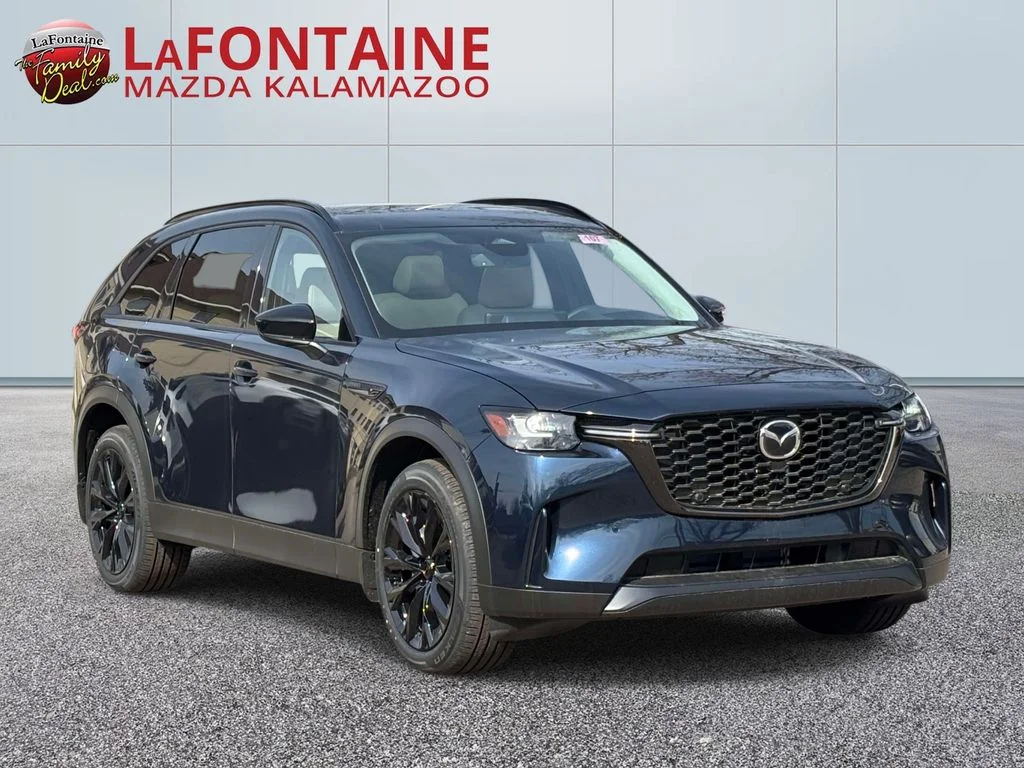
If you’re shopping for a three-row SUV in Kalamazoo, the 2026 Mazda CX-90 and the redesigned 2027 Kia Telluride might be on your shortlist. The 2026 Mazda CX-90 and 2027 Kia Telluride both seat up to eight passengers and tow up to 5,000 pounds in the right configuration. Where the Mazda CX-90 and Kia Telluride split is in their engine options and how they feel on the road.
Key Takeaways
- The 2026 Mazda CX-90 offers an available plug-in hybrid (PHEV) with 26 miles of all-electric range.
- The 2027 Kia Telluride features a redesigned 2.5-liter turbo-four engine and an optional turbo-hybrid setup.
- The Mazda CX-90 utilizes a longitudinal, rear-biased platform for sportier handling , while the Telluride uses a front-drive-based layout aimed at highway cruising.
- Mazda earned the top IIHS safety rating under new, tougher criteria for both the CX-90 and CX-90 PHEV.
Engine Specs and Performance Comparison
When comparing performance, the 2026 Mazda CX-90 and 2027 Kia Telluride take different approaches to power and efficiency.
| Feature | 2025 Mazda CX-90 | 2027 Kia Telluride |
| Standard Engine | 3.3-liter turbocharged inline-six (mild-hybrid) | 2.5-liter turbo-four |
| Standard Horsepower | 280 hp (340 hp on Turbo S with premium fuel) | 274 hp |
| Standard Torque | 332 lb-ft | 311 lb-ft |
| Hybrid Option | 323 hp PHEV with 26 miles of all-electric range | 329 hp Turbo-Hybrid (estimated 35 MPG combined) |
| Max Towing | 5,000 lbs | 5,000 lbs |
The Kia Telluride hybrid is highly efficient, but if cutting gas station trips in half matters to you, the Mazda CX-90 PHEV is the only choice with all-electric range.
Handling and Suspension Differences
The Mazda CX-90 sits on a longitudinal, rear-biased platform with double wishbone front suspension and standard AWD on every trim. The CX-90 also utilizes Kinematic Posture Control, borrowed from the MX-5 Miata, which brakes the inner rear wheel mid-corner to reduce body roll.
The Kia Telluride uses a transverse, front-drive-based layout with MacPherson struts. The Telluride features a softer tune aimed at highway cruising, making it comfortable on I-94. However, a test drive on winding roads will show you the Mazda CX-90 responds like a different class of vehicle.
Interior Features and Technology
Inside the cabin, the 2026 Mazda CX-90 focuses on tactile luxury, offering Nappa leather, real maple wood, and Kakenui hanging stitches that add depth to the dash on upper trims. The CX-90 also features Mazda’s Driver Personalization System, which uses facial recognition to automatically set your seat, mirrors, and steering wheel the moment you sit down.
Kia went digital, fitting the 2027 Telluride with a dual 12.3-inch panoramic display and available in-car entertainment streaming.
Safety Ratings and Driver Assistance
Mazda earned more IIHS TOP SAFETY PICK+ awards than any other brand for 2026, the third year running. Both the CX-90 and CX-90 PHEV earned that top rating under toughened criteria covering nighttime pedestrian detection, heavier side-impact testing, and rear-seat protection. Every CX-90 includes automatic emergency braking, blind-spot monitoring, and lane-keep assist as standard equipment.
The Kia Telluride also earned a TOP SAFETY PICK+ on select trims. The Telluride offers Highway Driving Assist 2 and radar-based rear occupant alerts higher in the lineup. While both are safe vehicles, the Mazda CX-90’s across-the-board standardization gives it an edge.
Come See the Difference at Our Kalamazoo Dealership
Specs and comparisons only go so far. The best way to understand which SUV fits your life is to get behind the wheel. Stop by our Kalamazoo dealership and take the 2026 Mazda CX-90 for a drive. We think the inline-six engine alone will make the decision easy.
The midsize CX-90 rides on Mazda’s rear-biased i-Activ AWD platform with a longitudinal inline-6, an eight-speed automatic using a multi-plate wet clutch for more direct shifts, and Kinematic Posture Control that keeps the body flat through corners.
Enthusiasts will be happy to know that excellent foundation carries over to 2026 unchanged. What’s different is how much premium equipment Mazda has moved into the mid-range trims, making the CX-90 a stronger value across the lineup.
Powertrains
The turbocharged 3.3-liter inline-6 produces 280 horsepower and 332 lb-ft of torque on regular 87-octane fuel. A 48-volt M-Hybrid Boost motor sits between the engine and transmission, filling in low-end torque so throttle response feels immediate from a standstill. Combined fuel economy is an EPA-estimated 25 mpg. The Turbo S models use a high-output tune of the same engine: 340 horsepower and 369 lb-ft on 93-octane premium.
The PHEV combines a 2.5-liter four-cylinder with a 68-kW electric motor and a 17.8-kWh battery for 323 combined horsepower and 369 lb-ft. Electric-only range reaches up to 27 miles, enough for most daily driving around Kalamazoo without starting the gasoline engine. Charge Mode rebuilds battery reserves on the highway so you have EV range available when you reach town. The total combined range is about 500 miles.
Inline-6 Trim Highlights
The Turbo Select is the entry point, with eight-passenger seating, leatherette, a power liftgate, and Alexa Built-in for 2026, which adds natural voice control for climate, audio, navigation, and smart home devices.
The Turbo Preferred sees the largest upgrade this year. Mazda added ventilated front seats, heated second-row seats, a heated steering wheel, a power passenger seat, and two-position driver’s seat memory. In 2025, most of those features required a higher trim. For Michigan’s winters and warm summers, having seat ventilation and heating at this level makes a real difference in daily comfort.
The Turbo Premium Sport carries 21-inch dark-finish wheels, a gloss black grille, blacked-out badges (including new blacked-out Mazda logos for 2026), and auto-dimming power-folding mirrors. Towing capacity reaches 5,000 lbs with Mi-Drive Towing mode and Mazda’s genuine towing accessories, enough for a mid-size boat headed to Gull Lake. A Bose 12-speaker audio system and a 12.3-inch fully digital instrument cluster are included.
The Turbo Premium Plus now offers a choice between second-row captain’s chairs or a bench seat. Previous versions of this trim focused on seven-passenger layouts, so eight-passenger capacity paired with Nappa leather and the 360° View Monitor with See-Through View is a new option for 2026.
At the top, the Turbo S Premium Sport is new for 2026, pairing the 340-hp engine with the full blackout exterior. The Turbo S Premium Plus remains the flagship, with Nappa leather available in Black or White Japanese Premium options.
PHEV Trim Highlights
Every 2026 CX-90 PHEV rides on 21-inch wheels as standard, up from the 19-inch set on the 2025 Preferred. The visual difference is noticeable, and the larger wheel-and-tire package contributes to more consistent handling.
The PHEV Preferred now includes ventilated front seats, heated first- and second-row seats, a heated steering wheel, and driver’s seat memory. The cabin treatment matches the sophistication of the powertrain from the entry trim.
From the Premium Sport trim up, PHEV models include a 1,500-watt accessory outlet that draws from the traction battery, useful for running tools or appliances without a separate generator. The PHEV Premium Plus adds Front Cross Traffic Alert and the 360° View Monitor with See-Through View.
Technology and Safety
Alexa Built-in is standard on every 2026 CX-90, providing voice control for vehicle functions, music, weather, directions, and compatible smart home devices.
From the Preferred trim up, a 12.3-inch center touchscreen handles Apple CarPlay and Android Auto, with the commander knob still available for Mazda Connect menus. Wireless phone charging is standard at this level.
Every CX-90 includes Mazda Radar Cruise Control with stop-and-go, Smart Brake Support (automatic emergency braking for vehicles, pedestrians, and cyclists), Blind Spot Monitoring with Vehicle Exit Warning, Rear Cross-Traffic Alert, and lane-keep assist. Premium Sport and Premium Plus trims add Cruising & Traffic Support for semi-autonomous highway driving, Emergency Lane Keeping with Blind Spot Assist, and Head-on Traffic Avoidance Assist.
Exterior Updates
Polymetal Gray Metallic joins the 2026 palette. The color shifts between a flat gray in shade and a blue-gray metallic in direct sunlight, and it sits alongside Artisan Red, Soul Red Crystal, and Rhodium White in the premium paint options.
The Sport exterior package, with its darker trim and blacked-out badges, now extends to the Turbo S Premium Sport, giving buyers who want the high-output engine a more aggressive aesthetic option.
See the 2026 CX-90 in Kalamazoo
Whether you’re considering the inline-6 or the PHEV, the 2026 CX-90 brings more standard equipment into the trims where most buyers shop. Stop by our Kalamazoo showroom and we’ll walk you through the differences in person.
Mazda’s Technology – What’s New for 2026?
TL;DR | The Big Picture
Mazda’s 2026 US lineup focuses on major technology overhauls, prioritizing larger displays, wireless connectivity, and advanced automation across all models—from the Mazda3 to the flagship CX-90.
Key Technology Updates
- Bigger, Smarter Screens:
- The Standout: Higher-trim CX-5 models now feature a massive 15.6-inch touchscreen with Google built-in (Assistant, Maps, and future Gemini AI capabilities).
- The Rest: The CX-70 and CX-90 utilize a 12.3-inch display, while the CX-30, CX-50, and Turbo-trim Mazda3s upgrade to a 10.25-inch screen.
- Wireless Connectivity:
- Wireless Apple CarPlay & Android Auto are now standard on the CX-50, CX-70, and CX-90 (all trims).
- Mid-level trims and above for the CX-30 and Mazda3 now include wireless connectivity.
- Alexa Built-in is available on multiple models for voice-controlled smart home and media management.
- Enhanced Safety (i-Activsense):
- Standard safety features across the board now include Blind Spot Monitoring, Rear Cross-Traffic Alert, and Vehicle Exit Warning (on most trims).
- Cruising & Traffic Support (traffic jam assist/lane centering) is available on upper trims of the CX-50, CX-70, and CX-90.
- Driver Personalization:
- Facial recognition technology is now widely available, automatically adjusting the seat, mirrors, steering wheel, and HUD based on the driver’s profile.
- 360-Degree View Monitor now features a “See-Through View” to help spot low obstacles under the vehicle.
Mazda’s 2026 lineup brings meaningful technology upgrades across every model sold in the U.S., from the compact Mazda3 to the three-row CX-90. Whether you’re shopping for a daily commuter or a family SUV, the tech has moved forward in significant ways.
Bigger Screens and a Smarter Interface
On higher‑trim CX‑5 models, Mazda includes a 15.6‑inch integrated center touchscreen running Google built‑in with Google Assistant and future capability for Google Gemini via software update.
Screens are growing across the rest of the lineup too. The CX‑70 and CX‑90 carry a 12.3‑inch central display on most trims, controlled primarily via a rotary knob rather than as a full‑time touchscreen. The CX‑30 and CX‑50 offer a 10.25‑inch touchscreen on select mid‑level and higher trims, replacing smaller displays from earlier years. Even the Mazda3 gains a 10.25‑inch infotainment screen on its Turbo‑series Premium‑grade trims, up from the previous 8.8‑inch unit that was standard on earlier CX‑ and Mazda3 models.
Wireless Connectivity
For 2026, Mazda pushed wireless Apple CarPlay and Android Auto across most of the US lineup. The CX‑50 includes it standard on all trims. The CX‑70 and CX‑90 likewise offer wireless Apple CarPlay and Android Auto on every trim level. The CX‑30 and Mazda3 gain wireless connectivity starting on mid‑level trims and above, while even the MX‑5 Miata adds wireless Apple CarPlay on its Club and Grand Touring variants.
Alexa Built‑in joins the 2026 Mazda lineup on multiple models. You can ask Alexa to play music, check the weather, get directions, or control smart‑home devices without touching your phone, as long as Mazda Connected Services or a phone‑based Wi‑Fi hotspot is enabled.
i-Activsense Safety
Mazda’s i‑Activsense safety suite has always packed more standard features into these price points than many shoppers expect. For 2026, it goes further: Blind Spot Monitoring, Rear Cross‑Traffic Alert, Smart‑Brake Support (automatic emergency braking), and Lane Departure Warning are now standard on every 2026 Mazda model that carries the i‑Activsense label, which covers the CX‑30, CX‑50, CX‑70, CX‑90, CX‑5, Mazda3, and MX‑5 Miata at various trim levels. The lineup also adds Vehicle Exit Warning as a standard feature on many mid‑level and higher trims, alerting occupants to approaching traffic or cyclists before they open a door.
The all‑new 2026 CX‑5 sets a new bar. Its base model includes features that were either new or previously optional/trim‑limited on the 2025 CX‑5: Traffic Sign Recognition, Speed Limit Assist with Mazda Radar Cruise Control, Smart‑Brake Support for Turn‑Across Traffic (which detects oncoming vehicles when you’re turning left and can apply the brakes automatically), and Emergency Lane Keeping with Blind Spot Assist, all now standard.
Higher trims on the CX‑70 and CX‑90, and mid‑to‑upper trims of the CX‑50, now include Cruising & Traffic Support, Mazda’s traffic‑jam‑assist and light‑lane‑centering system. It combines Mazda Radar Cruise Control with steering‑assist functions at low‑ to highway‑speeds so the vehicle can manage acceleration, braking, and gentle lane‑centering steering inputs to take the strain out of stop‑and‑go commutes and steady‑state highway driving.
360-Degree Cameras and Driver Personalization
The 360‑Degree View Monitor with See‑Through View is now available on several top‑trim Mazda crossovers in the 2026 lineup. It stitches feeds from multiple cameras into a bird’s‑eye view and uses image‑processing to render a “ghosted” or transparent‑vehicle effect, helping drivers spot low obstacles, curbs, or pavement markings that would otherwise be hidden beneath the car’s body.
Mazda’s Driver Personalization System has also spread across much of the lineup. Using facial recognition, it automatically adjusts the driver’s seat, mirrors, steering wheel, and (on some models) head‑up display height to each driver’s saved profile the moment they sit down and close the door.
Audio and Connected Services
A Bose 12‑speaker premium audio system is available as an option on upper trims across the CX‑30, CX‑50, CX‑70, and CX‑90, replacing or supplementing the standard audio on those higher‑grade configurations. The Mazda3 offers a Bose‑branded premium system on its Turbo‑series models and Carbon Edition, while the MX‑5 Miata retains its unique Bose 9‑speaker setup with UltraNearfield headrest speakers, specifically tuned for open‑top listening and open‑air cone‑noise masking.
Every 2026 Mazda equipped with Mazda Connected Services includes a one‑year complimentary trial of remote‑start, remote‑lock/unlock, and vehicle‑status services via the MyMazda app, with in‑car Wi‑Fi hotspot capability offered on select models under a data‑plan‑based subscription.
If you want to see how any of this works in person, stop by our dealership in Kalamazoo. The 2026 models have taken Mazda’s technology to a new level, especially the all-new CX-5.
Mazda didn’t treat the 2026 CX-5 like a mid-cycle refresh. By stretching the platform, reworking the interior architecture, and rebuilding the tech stack around Google built‑in, this is a real rethink of what the CX-5 is supposed to be.
Top Features of the 2026 Mazda CX-5:
- All-new platform with a 4.5-inch longer wheelbase, improving rear legroom and ride stability
- 15.6-inch integrated touchscreen, the largest display Mazda has ever installed
- Google built-in with native Google Maps and Google Assistant, no phone required
- Reworked interior with a horizontal “lounge” layout, replacing the cockpit-style design
- Lower cargo lift-in height and longer cargo floor, easing daily loading
- Driver Personalization System with facial recognition on Premium Plus trims
- Retuned Skyactiv-G 2.5L engine focused on smoother low-RPM response and lower noise
- Expanded availability of luxury features, including ventilated seats and heated rear seats
It’s a Bigger CX-5, and You Feel It Immediately
The most important change from 2025 to 2026 sits underneath the sheet metal. Mazda stretched the wheelbase and overall length by 4.5 inches, which alters both stance and interior packaging.
From the driver’s seat, the CX-5 feels more planted at highway speed, thanks to the longer footprint and revised suspension geometry. From the rear seat, the difference shows up as more knee clearance. Door openings are wider, and child seats are easier to maneuver.
Interior Design: From Cockpit to Lounge
Inside, the 2026 dashboard now runs horizontally across the cabin, emphasizing width and creating a calmer visual field. Physical button stacks have been reduced, and the center console sits lower, opening space between the front seats.
Materials still matter to Mazda. Soft-touch surfaces extend farther across the doors, trim transitions are tighter, and ambient lighting is now integrated into the door panels with seven selectable colors.
At night, the cabin feels closer to a quiet waiting room than a traditional compact SUV interior, especially once road noise fades thanks to added sound insulation and revised aero around the mirrors.
Technology Catches Up to the Hardware
The 2025 CX-5’s 10.25-inch screen and rotary controller were good for keeping distractions to a minimum, but many buyers found the system restrictive. Mazda reversed course for 2026 with a 15.6-inch touchscreen that supports direct interaction at all times.
More important than size is software. Google built-in replaces Mazda’s proprietary system, meaning Google Maps runs natively with live traffic, lane guidance, and routing that appears in the head-up display. Voice commands now work the way people expect. Saying “Hey Google, set the temperature to 70” actually changes the climate settings, rather than triggering a menu prompt.
On Premium Plus trims, the Driver Personalization System adds a small camera near the screen that recognizes the driver’s face. Once a profile is stored, the CX-5 automatically adjusts seat position, steering wheel, mirrors, head-up display height, and even audio preferences.
Powertrain Philosophy Shifts Toward Refinement
The 2026 CX-5 launches with a single engine, the naturally aspirated Skyactiv-G 2.5-liter four-cylinder producing 187 horsepower and 185 lb-ft of torque. While those numbers almost mirror the base engine from 2025, calibration changes focus on smoother throttle response at low speed and quieter operation at cruise.
All-wheel drive remains standard across the lineup, and the suspension tuning leans toward compliance rather than sharpness. Mazda has already confirmed a hybrid variant for a future model year, built around its next-generation Skyactiv-Z technology.
Cargo and Daily Use Get Smarter
Behind the second row, cargo capacity grows thanks to a longer rear overhang and a floor that sits over half an inch lower than before. Loading heavy items feels easier, and the cargo floor itself stretches nearly two inches longer, which matters when hauling strollers, golf bags, or home improvement supplies.
Rear passengers benefit from added USB-C ports on higher trims, optional heated rear seats, and dedicated air vents, features that were either unavailable or limited on the 2025 model.
Safety Systems Take a Step Forward
Both generations include Mazda’s i-Activsense suite, yet the 2026 CX-5 adds more active assistance. Cruising and Traffic Support provides steering help at a wider range of speeds, reducing fatigue in congestion. Vehicle Exit Warning uses rear radar sensors to alert occupants if a cyclist or car is approaching as a door opens, a small feature that becomes valuable in urban driving.
Overall, the 2026 CX-5 answers long-standing requests for space, tech, and comfort, wrapping them in a calmer, more mature package that fits how most people actually use their vehicles today.
SKYACTIV Technology: What Makes Your Mazda Different
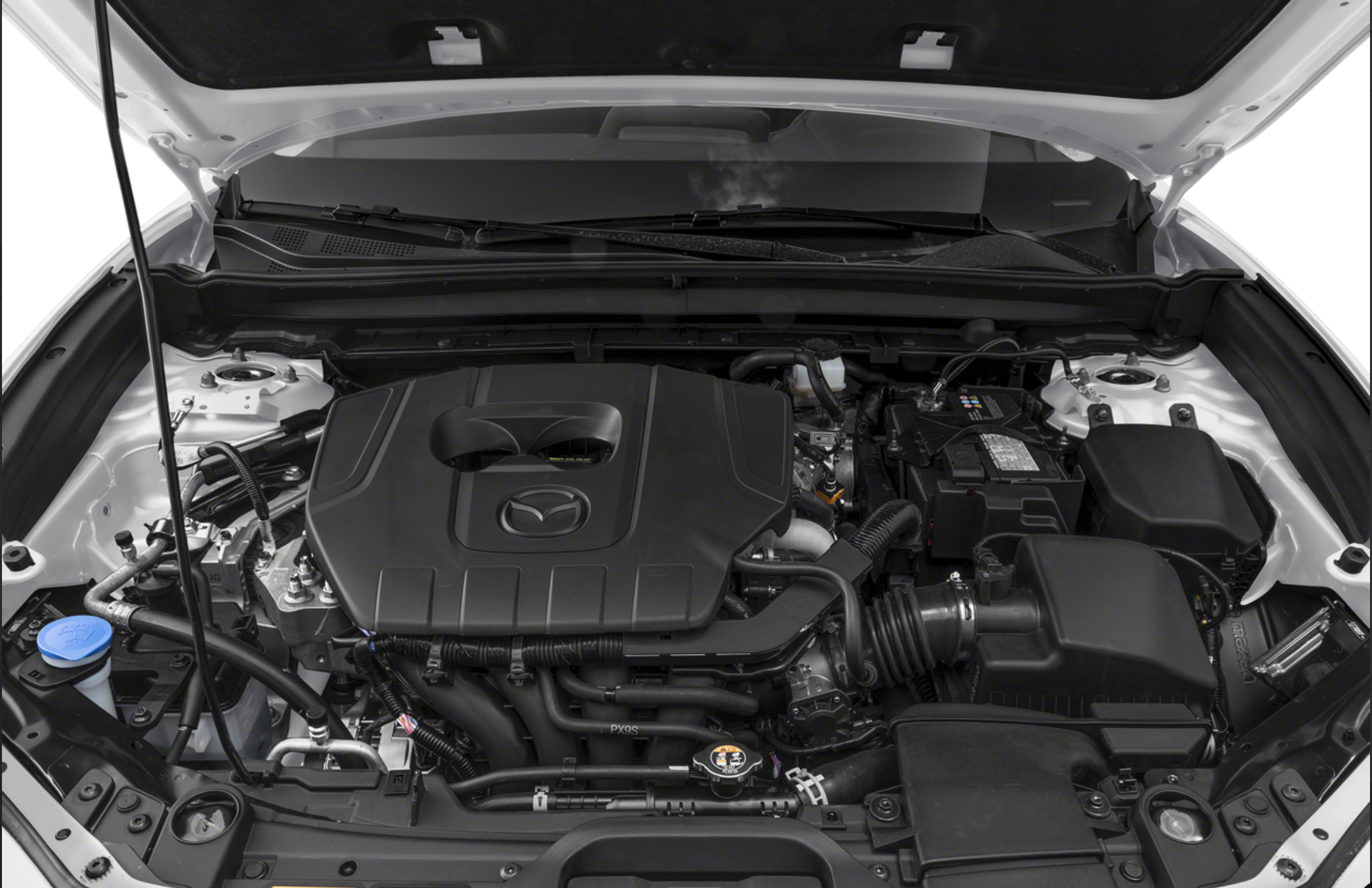
When you drive a Mazda, you’re experiencing the result of an engineering philosophy that refuses to compromise. SKYACTIV technology represents Mazda’s answer to a question most automakers thought impossible: how do you build a car that’s genuinely fuel-efficient and genuinely fun to drive? The answer was to rethink everything — engines, transmissions, body structure, and chassis — from the ground up.
What Is Mazda SKYACTIV Technology?
Most automakers treat fuel economy and performance as a tradeoff — you get one by sacrificing the other. Mazda’s engineers rejected that premise entirely. SKYACTIV technologies are engineered together so that what makes your Mazda more efficient also makes it lighter, stiffer, and better to drive.
What Does Each SKYACTIV System Do?
SKYACTIV-G
High-compression gasoline engine that extracts more energy from each combustion cycle. Runs at 13:1 compression or higher — well above the industry norm — for better efficiency without a hybrid system.
SKYACTIV-Drive
6-speed automatic calibrated for quick, smooth shifts that keep the engine in its optimal power range. Wider lock-up range than conventional automatics means less energy lost to the torque converter.
SKYACTIV-Body
Ultra-high-tensile steel construction that’s lighter than conventional steel yet significantly stiffer. Less weight means better fuel economy; more rigidity means better crash protection and handling precision.
SKYACTIV-Chassis
Optimized suspension geometry tuned to work with the lighter body. The result is more responsive steering, better ride quality over rough roads, and a lower center of gravity.
How Does the SKYACTIV-G Engine Work?
The SKYACTIV-G gasoline engine’s defining feature is its high compression ratio. Compression ratio describes how tightly the engine squeezes the air-fuel mixture before igniting it — the higher the ratio, the more energy extracted from each combustion event.
Most conventional gasoline engines run compression ratios between 10:1 and 12:1. At higher ratios, the mixture tends to ignite before the spark plug fires — a problem called engine knock — which limits how far engineers can push conventional designs. Mazda’s engineers solved this through exhaust gas recirculation, revised combustion chamber geometry, and multi-hole injectors, allowing the SKYACTIV-G to run at 13:1 or higher without knock.
The payoff: you get more power per unit of fuel, without adding the cost and complexity of a hybrid system.
What Makes the SKYACTIV Transmission Different?
The SKYACTIV-Drive 6-speed automatic is calibrated for one goal: keeping the engine in its optimal power range as much of the time as possible. It achieves this through a wider torque converter lock-up range than conventional automatics — meaning the transmission mechanically connects engine to wheels more of the time, reducing energy lost as heat.
The result is shifts that feel crisp and controlled, whether you’re merging onto I-94 or navigating Kalamazoo’s side streets. You feel the engine working with the transmission, not fighting it.
How Does SKYACTIV Affect the Body and Chassis?
Weight is the enemy of both performance and fuel economy. Mazda’s SKYACTIV-Body uses ultra-high-tensile steel in key structural areas — a material that allows engineers to use less steel in the right places while increasing overall body rigidity. The result is a body that’s lighter than conventional designs and significantly stiffer.
That stiffness matters for two reasons. First, a rigid body transfers driver inputs to the wheels more directly, so the car responds more precisely to steering and braking. Second, a stiffer structure is better at managing crash energy — which is part of why Mazda consistently leads IIHS safety ratings. The SKYACTIV-Chassis then takes advantage of the lighter, stiffer body with optimized suspension geometry tuned for better handling balance and a more controlled ride.
What Is G-Vectoring Control?
G-Vectoring Control (GVC) is one of SKYACTIV’s most technically sophisticated features — and one of the least visible to the driver. The system makes tiny adjustments to engine torque in response to steering inputs.
When you begin a corner, GVC momentarily reduces engine torque. This shifts weight forward onto the front tires, increasing front grip and improving turn-in precision. As you exit the corner and straighten out, torque returns to normal, which shifts weight rearward to stabilize the car. The changes happen in fractions of a second and are imperceptible individually — but the cumulative effect is a car that feels more planted, more balanced, and more intuitive to drive than the hardware alone would suggest.
Mazda spent eight years developing GVC. Drivers often describe it as making the car feel like a natural extension of their movements rather than something they’re operating. It comes standard on every current Mazda model.
What’s Next for SKYACTIV Technology?
Mazda continues evolving the SKYACTIV platform in two directions simultaneously. Electrification is expanding through M-Hybrid Boost mild-hybrid systems (now standard on the CX-70 and CX-90 inline-6) and full plug-in hybrid powertrains — the CX-90 PHEV delivers 323 combined horsepower with a 2.5-liter engine and electric motor.
Mazda is also developing the SKYACTIV-Z engine, which promises even greater combustion efficiency while meeting stricter global emissions standards. The SKYACTIV-Z continues Mazda’s approach of extracting more from gasoline combustion before defaulting entirely to electrification — a philosophy that keeps the driving experience at the center of every engineering decision.
Experience SKYACTIV Technology at LaFontaine Mazda Kalamazoo
Every new Mazda on our lot — from the Mazda3 to the CX-90 — runs on SKYACTIV technology. The best way to understand what it means in practice is to drive one. Our team serves buyers from across Southwest Michigan, including Portage, Battle Creek, Grand Rapids, Holland, and Allegan.
Ready to feel the difference SKYACTIV makes?
View New Mazda Inventory Schedule a Test Drive Get Pre-ApprovedFrequently Asked Questions: Mazda SKYACTIV Technology
What is Mazda SKYACTIV technology?
Mazda SKYACTIV is a comprehensive engineering platform covering engines, transmissions, body structure, and chassis. It is designed so that every system works in harmony — extracting maximum efficiency and performance without requiring buyers to choose between fuel economy and a genuinely engaging drive.
What does SKYACTIV mean on a Mazda?
On a Mazda, SKYACTIV refers to the brand’s core engineering technologies. A SKYACTIV-G engine runs a higher compression ratio than conventional engines for better fuel efficiency. A SKYACTIV-Drive transmission shifts more responsively. A SKYACTIV-Body uses ultra-high-tensile steel for a lighter, stiffer structure. Together, they make every Mazda more efficient, safer, and more engaging to drive.
What SKYACTIV engine is in the Mazda CX-5?
The Mazda CX-5 uses the 2.5-liter SKYACTIV-G four-cylinder engine, producing 187 horsepower and 186 lb-ft of torque. A turbocharged 2.5T version delivering 256 horsepower is available on upper trims. Both engines are paired with the SKYACTIV-Drive 6-speed automatic.
Is SKYACTIV technology the same as a hybrid?
No. Standard SKYACTIV is not a hybrid system — it is a conventional gasoline engine and drivetrain engineered for higher efficiency through better combustion, lighter body structure, and smarter transmission tuning. Mazda does offer hybrid systems separately: M-Hybrid Boost mild-hybrid technology and full plug-in hybrid (PHEV) powertrains on the CX-70 and CX-90.
Why do engineers admire Mazda SKYACTIV technology?
Engineers value SKYACTIV because Mazda solved a problem that stumped most automakers: achieving a very high compression ratio in a gasoline engine without engine knock. Most engines run 10:1 to 12:1 compression; SKYACTIV-G runs at 13:1 or higher. This extracts more energy from each combustion event, improving fuel economy without adding hybrid complexity or cost.
Which Mazda models have SKYACTIV technology?
All current Mazda models include SKYACTIV technology. The Mazda3, CX-30, CX-5, and CX-50 use the SKYACTIV-G four-cylinder engine. The CX-70 and CX-90 use a SKYACTIV inline-6 with M-Hybrid Boost mild-hybrid technology. The CX-70 PHEV and CX-90 PHEV add a plug-in hybrid powertrain on the same SKYACTIV platform.
The Mazda in-vehicle experience is undergoing a significant evolution. For the 2026 model year, select vehicles will introduce substantially larger, high-resolution touchscreen displays integrated with Google built-in. This shift offers a more intuitive interface, seamless map navigation, and natural voice commands via Google Assistant designed to understand conversational language.
The new systems feature high-resolution displays with customizable layouts, allowing you to prioritize navigation, media, or vehicle status information. These updates are designed to reduce distraction while maximizing functionality through a modern, touch-first experience.
Safety First: Refined Driver Assistance
Mazda’s commitment to safety continues with refinements to Mazda driver assistance features. The 2026 lineup sees the expansion and enhancement of established technologies designed to support the driver:
- Enhanced Visibility: Availability of the 360° View Monitor with “See-Through View,” providing a comprehensive look at the vehicle’s surroundings to assist during low-speed maneuvers in tight spaces.
- Cruising & Traffic Support (CTS): This technology helps reduce driver fatigue by assisting with accelerator, brake, and steering operations in highway traffic jams.
- Advanced Sensing: Improved radar and camera systems that power features like Smart Brake Support and lane-keeping assistance.
These Mazda safety technology features work together to create a comprehensive layer of support, aligning with Mazda’s “Co-Pilot” philosophy of empowering the driver rather than replacing them.
Staying Connected On The Go
Mazda connectivity is reaching new levels with seamless integration across your devices. The 2026 models focus on streamlining the connection between car and driver:
- Enhanced Mazda smartphone integration with standard wireless Apple CarPlay™ and Android Auto™ capabilities.
- Driver Personalization Systems that use facial recognition in select models to restore saved settings—such as seat position and climate preferences—stored securely within the vehicle.
- Remote vehicle monitoring and control through an improved MyMazda app.
Imagine starting your car’s climate control from bed on a cold Michigan morning – that’s the practical convenience these systems offer.
Electrification: Mazda’s Hybrid Step Forward
An exciting development for 2026 is the introduction of Mazda’s new, in-house hybrid powertrain.
This Mazda hybrid technology combines impressive fuel efficiency with the distinct, responsive driving experience Mazda is known for. While Mazda continues developing future dedicated electric vehicles, the 2026 hybrid offerings are designed to offer a practical, eco-friendly alternative that is still engaging to drive.
What This Means For You
As future Mazda models begin incorporating these Mazda tech innovations, drivers can look forward to:
- A modernized, more intuitive infotainment interface with Google built-in.
- Improved fuel economy through new hybrid powertrain options.
- Enhanced driver assistance systems for greater peace of mind.
- Technology that complements your drive rather than complicating it.
At LaFontaine Mazda Kalamazoo, we’re staying informed on these upcoming technologies so we can help you make the most of these features when they arrive.
Want to discuss how Mazda’s technological future might fit into your life? Stop by our showroom, and let’s chat about which current model might be the perfect stepping stone to the exciting road ahead
Connect with us

