Blog / 2026 Mazda Tech

Blog

All 2026 Mazda Tech Kalamazoo Mazda Dealer 2026 Mazda Inventory Used Mazda
2026 Mazda 3

Mazda’s Technology - What’s New for 2026?

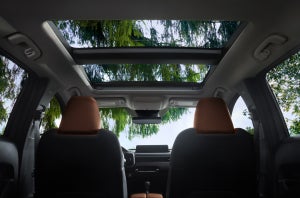
TL;DR | The Big Picture Mazda’s 2026 US lineup focuses on major technology overhauls, prioritizing larger displays, wireless connectivity, and advanced automation across all models—from the Mazda3 to the flagship CX-90. Key Technology Updates Bigger, Smarter Screens: The Standout: Higher-trim CX-5 models now feature a massive 15.6-inch touchscreen with Google built-in (Assistant, Maps, and future Gemini AI capabilities). The Rest: The CX-70 and CX-90 utilize a 12.3-inch display, while the CX-30, CX-50, and Turbo-trim Mazda3s upgrade to a 10.25-inch screen. Wireless Connectivity: Wireless Apple CarPlay & Android Auto are now standard on the CX-50, CX-70, and CX-90 (all trims). Mid-level trims and above for the CX-30 and Mazda3 now include wireless connectivity. Alexa Built-in is available on multiple models for voice-controlled smart home and media management. Enhanced Safety (i-Activsense): Standard safety features across the board now include Blind Spot Monitoring, Rear Cross-Traffic Alert, and Vehicle Exit Warning (on most trims). Cruising & Traffic Support (traffic jam assist/lane centering) is available on upper trims of the CX-50, CX-70, and CX-90. Driver Personalization: Facial recognition technology is now widely available, automatically adjusting the seat, mirrors, steering wheel, and HUD based on the driver’s profile. 360-Degree View Monitor now features a "See-Through View" to help spot low obstacles under the vehicle. Mazda’s 2026 lineup brings meaningful technology upgrades across every model sold in the U.S., from the compact Mazda3 to the three-row CX-90. Whether you’re shopping for a daily commuter or a family SUV, the tech has moved forward in significant ways. Bigger Screens and a Smarter Interface On higher‑trim CX‑5 models, Mazda includes a 15.6‑inch integrated center touchscreen running Google built‑in with Google Assistant and future capability for Google Gemini via software update. Screens are growing across the rest of the lineup too. The CX‑70 and CX‑90 carry a 12.3‑inch central display on most trims, controlled primarily via a rotary knob rather than as a full‑time touchscreen. The CX‑30 and CX‑50 offer a 10.25‑inch touchscreen on select mid‑level and higher trims, replacing smaller displays from earlier years. Even the Mazda3 gains a 10.25‑inch infotainment screen on its Turbo‑series Premium‑grade trims, up from the previous 8.8‑inch unit that was standard on earlier CX‑ and Mazda3 models. Wireless Connectivity For 2026, Mazda pushed wireless Apple CarPlay and Android Auto across most of the US lineup. The CX‑50 includes it standard on all trims. The CX‑70 and CX‑90 likewise offer wireless Apple CarPlay and Android Auto on every trim level. The CX‑30 and Mazda3 gain wireless connectivity starting on mid‑level trims and above, while even the MX‑5 Miata adds wireless Apple CarPlay on its Club and Grand Touring variants. Alexa Built‑in joins the 2026 Mazda lineup on multiple models. You can ask Alexa to play music, check the weather, get directions, or control smart‑home devices without touching your phone, as long as Mazda Connected Services or a phone‑based Wi‑Fi hotspot is enabled. i-Activsense Safety Mazda’s i‑Activsense safety suite has always packed more standard features into these price points than many shoppers expect. For 2026, it goes further: Blind Spot Monitoring, Rear Cross‑Traffic Alert, Smart‑Brake Support (automatic emergency braking), and Lane Departure Warning are now standard on every 2026 Mazda model that carries the i‑Activsense label, which covers the CX‑30, CX‑50, CX‑70, CX‑90, CX‑5, Mazda3, and MX‑5 Miata at various trim levels. The lineup also adds Vehicle Exit Warning as a standard feature on many mid‑level and higher trims, alerting occupants to approaching traffic or cyclists before they open a door. The all‑new 2026 CX‑5 sets a new bar. Its base model includes features that were either new or previously optional/trim‑limited on the 2025 CX‑5: Traffic Sign Recognition, Speed Limit Assist with Mazda Radar Cruise Control, Smart‑Brake Support for Turn‑Across Traffic (which detects oncoming vehicles when you’re turning left and can apply the brakes automatically), and Emergency Lane Keeping with Blind Spot Assist, all now standard. Higher trims on the CX‑70 and CX‑90, and mid‑to‑upper trims of the CX‑50, now include Cruising & Traffic Support, Mazda’s traffic‑jam‑assist and light‑lane‑centering system.  It combines Mazda Radar Cruise Control with steering‑assist functions at low‑ to highway‑speeds so the vehicle can manage acceleration, braking, and gentle lane‑centering steering inputs to take the strain out of stop‑and‑go commutes and steady‑state highway driving. 360-Degree Cameras and Driver Personalization The 360‑Degree View Monitor with See‑Through View is now available on several top‑trim Mazda crossovers in the 2026 lineup.  It stitches feeds from multiple cameras into a bird’s‑eye view and uses image‑processing to render a “ghosted” or transparent‑vehicle effect, helping drivers spot low obstacles, curbs, or pavement markings that would otherwise be hidden beneath the car’s body. Mazda’s Driver Personalization System has also spread across much of the lineup. Using facial recognition, it automatically adjusts the driver’s seat, mirrors, steering wheel, and (on some models) head‑up display height to each driver’s saved profile the moment they sit down and close the door. Audio and Connected Services A Bose 12‑speaker premium audio system is available as an option on upper trims across the CX‑30, CX‑50, CX‑70, and CX‑90, replacing or supplementing the standard audio on those higher‑grade configurations.  The Mazda3 offers a Bose‑branded premium system on its Turbo‑series models and Carbon Edition, while the MX‑5 Miata retains its unique Bose 9‑speaker setup with UltraNearfield headrest speakers, specifically tuned for open‑top listening and open‑air cone‑noise masking. Every 2026 Mazda equipped with Mazda Connected Services includes a one‑year complimentary trial of remote‑start, remote‑lock/unlock, and vehicle‑status services via the MyMazda app, with in‑car Wi‑Fi hotspot capability offered on select models under a data‑plan‑based subscription. If you want to see how any of this works in person, stop by our dealership in Kalamazoo. The 2026 models have taken Mazda’s technology to a new level, especially the all-new CX-5. Shop New Mazda Inventory
Mazda's SKYACTIV Technology

SKYACTIV Technology: What Makes Your Mazda Different

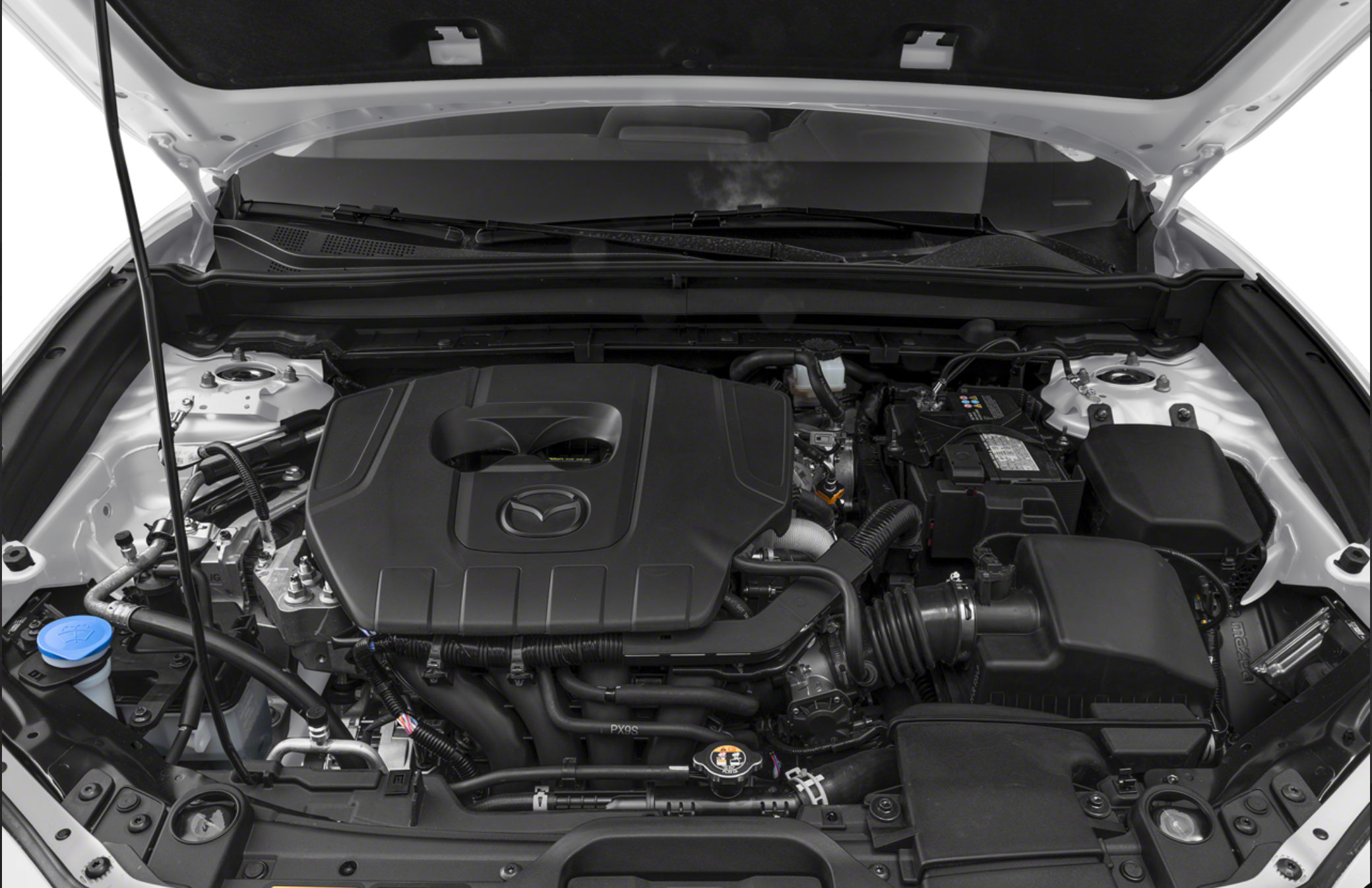
═══════════════════════════════════════════════════ HIDDEN META INJECTION ═══════════════════════════════════════════════════ ═══════════════════════════════════════════════════ SCHEMA — BlogPosting + FAQPage ═══════════════════════════════════════════════════ What Is Mazda SKYACTIV Technology? Here’s How It Works Mazda SKYACTIV covers engines, transmissions, body, and chassis — all engineered to deliver better efficiency without sacrificing the drive. Here’s what it means for your Mazda. ═══════════════════════════════════════════════════ BLOG CONTENT — paste into WordPress HTML editor ═══════════════════════════════════════════════════ LaFontaine Mazda Kalamazoo | December 2025, Updated July 2026 | 5-minute read When you drive a Mazda, you're experiencing the result of an engineering philosophy that refuses to compromise. SKYACTIV technology represents Mazda's answer to a question most automakers thought impossible: how do you build a car that's genuinely fuel-efficient and genuinely fun to drive? The answer was to rethink everything — engines, transmissions, body structure, and chassis — from the ground up. SECTION 1 What Is Mazda SKYACTIV Technology? Direct Answer Mazda SKYACTIV is a comprehensive engineering platform — not a single feature or marketing term. It covers four core systems: engines (SKYACTIV-G and SKYACTIV-X), transmissions (SKYACTIV-Drive), body structure (SKYACTIV-Body), and chassis (SKYACTIV-Chassis). Every system is designed to work in harmony with the others, so the result is better efficiency, better handling, and a more engaging drive — at the same time. Most automakers treat fuel economy and performance as a tradeoff — you get one by sacrificing the other. Mazda's engineers rejected that premise entirely. SKYACTIV technologies are engineered together so that what makes your Mazda more efficient also makes it lighter, stiffer, and better to drive. SECTION 2 What Does Each SKYACTIV System Do? Engine SKYACTIV-G High-compression gasoline engine that extracts more energy from each combustion cycle. Runs at 13:1 compression or higher — well above the industry norm — for better efficiency without a hybrid system. Transmission SKYACTIV-Drive 6-speed automatic calibrated for quick, smooth shifts that keep the engine in its optimal power range. Wider lock-up range than conventional automatics means less energy lost to the torque converter. Body SKYACTIV-Body Ultra-high-tensile steel construction that's lighter than conventional steel yet significantly stiffer. Less weight means better fuel economy; more rigidity means better crash protection and handling precision. Chassis SKYACTIV-Chassis Optimized suspension geometry tuned to work with the lighter body. The result is more responsive steering, better ride quality over rough roads, and a lower center of gravity. SECTION 3 How Does the SKYACTIV-G Engine Work? The SKYACTIV-G gasoline engine's defining feature is its high compression ratio. Compression ratio describes how tightly the engine squeezes the air-fuel mixture before igniting it — the higher the ratio, the more energy extracted from each combustion event. Most conventional gasoline engines run compression ratios between 10:1 and 12:1. At higher ratios, the mixture tends to ignite before the spark plug fires — a problem called engine knock — which limits how far engineers can push conventional designs. Mazda's engineers solved this through exhaust gas recirculation, revised combustion chamber geometry, and multi-hole injectors, allowing the SKYACTIV-G to run at 13:1 or higher without knock. The payoff: you get more power per unit of fuel, without adding the cost and complexity of a hybrid system. 187 hp — 2.5L SKYACTIV-G (CX-5, CX-30, Mazda3) 256 hp — 2.5L SKYACTIV-G Turbo (CX-5, CX-50 upper trims) 340 hp — 3.3L Inline-6 with M-Hybrid Boost (CX-90 Turbo S) 323 hp — CX-90 PHEV combined system output SECTION 4 What Makes the SKYACTIV Transmission Different? The SKYACTIV-Drive 6-speed automatic is calibrated for one goal: keeping the engine in its optimal power range as much of the time as possible. It achieves this through a wider torque converter lock-up range than conventional automatics — meaning the transmission mechanically connects engine to wheels more of the time, reducing energy lost as heat. The result is shifts that feel crisp and controlled, whether you're merging onto I-94 or navigating Kalamazoo's side streets. You feel the engine working with the transmission, not fighting it. SECTION 5 How Does SKYACTIV Affect the Body and Chassis? Weight is the enemy of both performance and fuel economy. Mazda's SKYACTIV-Body uses ultra-high-tensile steel in key structural areas — a material that allows engineers to use less steel in the right places while increasing overall body rigidity. The result is a body that's lighter than conventional designs and significantly stiffer. That stiffness matters for two reasons. First, a rigid body transfers driver inputs to the wheels more directly, so the car responds more precisely to steering and braking. Second, a stiffer structure is better at managing crash energy — which is part of why Mazda consistently leads IIHS safety ratings. The SKYACTIV-Chassis then takes advantage of the lighter, stiffer body with optimized suspension geometry tuned for better handling balance and a more controlled ride. SECTION 6 What Is G-Vectoring Control? G-Vectoring Control (GVC) is one of SKYACTIV's most technically sophisticated features — and one of the least visible to the driver. The system makes tiny adjustments to engine torque in response to steering inputs. When you begin a corner, GVC momentarily reduces engine torque. This shifts weight forward onto the front tires, increasing front grip and improving turn-in precision. As you exit the corner and straighten out, torque returns to normal, which shifts weight rearward to stabilize the car. The changes happen in fractions of a second and are imperceptible individually — but the cumulative effect is a car that feels more planted, more balanced, and more intuitive to drive than the hardware alone would suggest. Mazda spent eight years developing GVC. Drivers often describe it as making the car feel like a natural extension of their movements rather than something they're operating. It comes standard on every current Mazda model. SECTION 7 What's Next for SKYACTIV Technology? Mazda continues evolving the SKYACTIV platform in two directions simultaneously. Electrification is expanding through M-Hybrid Boost mild-hybrid systems (now standard on the CX-70 and CX-90 inline-6) and full plug-in hybrid powertrains — the CX-90 PHEV delivers 323 combined horsepower with a 2.5-liter engine and electric motor. Mazda is also developing the SKYACTIV-Z engine, which promises even greater combustion efficiency while meeting stricter global emissions standards. The SKYACTIV-Z continues Mazda's approach of extracting more from gasoline combustion before defaulting entirely to electrification — a philosophy that keeps the driving experience at the center of every engineering decision. 📌 Related: Is Mazda the Safest Car Brand? What the 2026 IIHS and Consumer Reports Data Shows CTA Experience SKYACTIV Technology at LaFontaine Mazda Kalamazoo Every new Mazda on our lot — from the Mazda3 to the CX-90 — runs on SKYACTIV technology. The best way to understand what it means in practice is to drive one. Our team serves buyers from across Southwest Michigan, including Portage, Battle Creek, Grand Rapids, Holland, and Allegan. Ready to feel the difference SKYACTIV makes? View New Mazda Inventory Schedule a Test Drive Get Pre-Approved FAQ Frequently Asked Questions: Mazda SKYACTIV Technology What is Mazda SKYACTIV technology? Mazda SKYACTIV is a comprehensive engineering platform covering engines, transmissions, body structure, and chassis. It is designed so that every system works in harmony — extracting maximum efficiency and performance without requiring buyers to choose between fuel economy and a genuinely engaging drive. What does SKYACTIV mean on a Mazda? On a Mazda, SKYACTIV refers to the brand's core engineering technologies. A SKYACTIV-G engine runs a higher compression ratio than conventional engines for better fuel efficiency. A SKYACTIV-Drive transmission shifts more responsively. A SKYACTIV-Body uses ultra-high-tensile steel for a lighter, stiffer structure. Together, they make every Mazda more efficient, safer, and more engaging to drive. What SKYACTIV engine is in the Mazda CX-5? The Mazda CX-5 uses the 2.5-liter SKYACTIV-G four-cylinder engine, producing 187 horsepower and 186 lb-ft of torque. A turbocharged 2.5T version delivering 256 horsepower is available on upper trims. Both engines are paired with the SKYACTIV-Drive 6-speed automatic. Is SKYACTIV technology the same as a hybrid? No. Standard SKYACTIV is not a hybrid system — it is a conventional gasoline engine and drivetrain engineered for higher efficiency through better combustion, lighter body structure, and smarter transmission tuning. Mazda does offer hybrid systems separately: M-Hybrid Boost mild-hybrid technology and full plug-in hybrid (PHEV) powertrains on the CX-70 and CX-90. Why do engineers admire Mazda SKYACTIV technology? Engineers value SKYACTIV because Mazda solved a problem that stumped most automakers: achieving a very high compression ratio in a gasoline engine without engine knock. Most engines run 10:1 to 12:1 compression; SKYACTIV-G runs at 13:1 or higher. This extracts more energy from each combustion event, improving fuel economy without adding hybrid complexity or cost. Which Mazda models have SKYACTIV technology? All current Mazda models include SKYACTIV technology. The Mazda3, CX-30, CX-5, and CX-50 use the SKYACTIV-G four-cylinder engine. The CX-70 and CX-90 use a SKYACTIV inline-6 with M-Hybrid Boost mild-hybrid technology. The CX-70 PHEV and CX-90 PHEV add a plug-in hybrid powertrain on the same SKYACTIV platform.

2026 Mazda CX50 for sale in kalamazoo, mi

The Evolution of Mazda's Infotainment Experience and 2026 Offerings

The Mazda in-vehicle experience is undergoing a significant evolution. For the 2026 model year, select vehicles will introduce substantially larger, high-resolution touchscreen displays integrated with Google built-in. This shift offers a more intuitive interface, seamless map navigation, and natural voice commands via Google Assistant designed to understand conversational language. The new systems feature high-resolution displays with customizable layouts, allowing you to prioritize navigation, media, or vehicle status information. These updates are designed to reduce distraction while maximizing functionality through a modern, touch-first experience. Safety First: Refined Driver Assistance Mazda's commitment to safety continues with refinements to Mazda driver assistance features. The 2026 lineup sees the expansion and enhancement of established technologies designed to support the driver: Enhanced Visibility: Availability of the 360° View Monitor with "See-Through View," providing a comprehensive look at the vehicle’s surroundings to assist during low-speed maneuvers in tight spaces. Cruising & Traffic Support (CTS): This technology helps reduce driver fatigue by assisting with accelerator, brake, and steering operations in highway traffic jams. Advanced Sensing: Improved radar and camera systems that power features like Smart Brake Support and lane-keeping assistance. These Mazda safety technology features work together to create a comprehensive layer of support, aligning with Mazda’s "Co-Pilot" philosophy of empowering the driver rather than replacing them. Staying Connected On The Go Mazda connectivity is reaching new levels with seamless integration across your devices. The 2026 models focus on streamlining the connection between car and driver: Enhanced Mazda smartphone integration with standard wireless Apple CarPlay™ and Android Auto™ capabilities. Driver Personalization Systems that use facial recognition in select models to restore saved settings—such as seat position and climate preferences—stored securely within the vehicle. Remote vehicle monitoring and control through an improved MyMazda app. Imagine starting your car's climate control from bed on a cold Michigan morning – that's the practical convenience these systems offer. Electrification: Mazda's Hybrid Step Forward An exciting development for 2026 is the introduction of Mazda’s new, in-house hybrid powertrain. This Mazda hybrid technology combines impressive fuel efficiency with the distinct, responsive driving experience Mazda is known for. While Mazda continues developing future dedicated electric vehicles, the 2026 hybrid offerings are designed to offer a practical, eco-friendly alternative that is still engaging to drive. What This Means For You As future Mazda models begin incorporating these Mazda tech innovations, drivers can look forward to: A modernized, more intuitive infotainment interface with Google built-in. Improved fuel economy through new hybrid powertrain options. Enhanced driver assistance systems for greater peace of mind. Technology that complements your drive rather than complicating it. At LaFontaine Mazda Kalamazoo, we're staying informed on these upcoming technologies so we can help you make the most of these features when they arrive. Want to discuss how Mazda's technological future might fit into your life? Stop by our showroom, and let's chat about which current model might be the perfect stepping stone to the exciting road ahead Shop 2026 Mazda Models

Contact Us

Fill out this form below and we'll contact you shortly
*Required Fields